By Kiara Doyal, The Seattle Medium
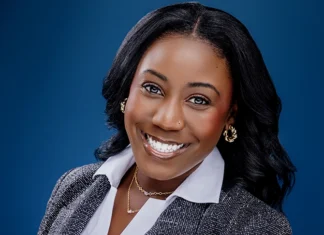
According to Shalimar Gonzales, chief executive officer of Solid Ground, a Seattle-based anti-poverty and social service organization, rising housing costs, transportation expenses and everyday living costs are making it increasingly difficult for many families to remain financially stable in the Seattle region.
For Gonzales, those economic pressures underscore the importance of helping families address financial challenges before a temporary setback becomes a long-term crisis.
“There is such a disparity of wealth in Seattle. The market responds to what people can bear to pay, and so if somebody’s making half a million dollars a year, a $20 Subway sandwich isn’t necessarily that big of a deal for them, but it’s a big deal for the rest of us,” said Gonzales. “We continue to see huge growths in the cost of living and housing and so people are kind of stuck where they are at and we especially see this in our Black community.”
Gonzales said one of Solid Ground’s priorities is ensuring that both its staff and community partnerships reflect the people the organization serves.
“I know that people say that all the time, but it’s important. About 33% of the folks that come and use our services self-identify as Black, 53% of our staff self-identify as Black, and 64% identify as BIPOC,” said Gonzales. “We really do feel like in order for us to do our work and do it effectively, having a life experience, having a viewpoint, and having a cultural background that is similar to the folks that we’re serving, is super important.”
In addition to building a diverse workforce, Gonzales said Solid Ground intentionally partners with organizations that are deeply rooted in the communities they serve.
“We intentionally seek out those who represent the folks we serve. We specifically partner with Black-led organizations to give us voice and give life into the work that we are trying to do,” said Gonzales. “As an agency, we don’t necessarily see ourselves as a Black-led organization even though several of us are Black. Our calling is to make sure that we partner with organizations like Byrd Barr Place and the Urban League in this work.”
As community needs continue to evolve, Gonzales said Solid Ground regularly assesses gaps in services and adjusts its programs and outreach efforts accordingly.
“We really do try to be on the front end of what folks are telling us that they need right now, and trying to respond to that, and trying to do advocacy to be able to bring more resources to those particular areas,” said Gonzales. “We’ve continued to push our services deeper into South Seattle and South King County, and by working together with other organizations is how we are able to stay relevant and address some of the disparities that we’re seeing that disproportionately impact community members in our area.”
According to Gonzales, many people experiencing hardship are not necessarily facing chronic poverty. Instead, they are often one unexpected expense away from a financial crisis.
“The folks that just had something happen, either their car broke down and they can’t get to work, and all they need is somebody to help them repair their car,” said Gonzales. “Helping before those small things snowball into seismic things is the work that we try to do, and we find that particularly Black community members sometimes just need a little bit of help.”
Gonzales said many existing systems require people to reach a severe level of need before they become eligible for assistance, leaving organizations like Solid Ground to fill critical gaps.
“And the systems, right now, particularly at the federal level, and some at the government level, they really do require people to fall into a level of destitution before they can be allowed to be served and so we are filling that gap,” said Gonzales.
Despite growing concerns surrounding homelessness, affordability and inequality, Gonzales remains optimistic that public understanding of poverty is beginning to shift.
“The systems that we have created as a society have failed the people, not the people failing the system,” said Gonzales. “Now, we’re starting to see more conversation and more understanding from the public at large, no matter where they fall on the political spectrum, that our systems are pretty bad and because of that it is impacting Black Americans and everybody.”
That growing awareness gives Gonzales hope that meaningful policy changes are possible.
“So that gives me hope, because I think we can leverage that, and we can really start to look at making systemic change in our policies,” she said. “And if we can change policies, then ultimately organizations like Solid Ground should cease to exist, because it means that the government is doing what it’s supposed to do, which is take care of its citizens.”